A Non-Mormon's Guide to Salt Lake City

A quick disclaimer: I am, unapologetically, weird. Someone told me earlier this year that 2026 is the "year of the weird," and I felt inspired to share more of myself and branch out beyond the typical hiking and travel advice.
One of my quirks is that I have several special interests, most of which have fascinated me for decades (yes, I am diagnosed autistic if you hadn't already guessed). These include alligators, Barbie, Yellowstone National Park, the American Bison, indigenous people, the Amish, the Satanic Panic of the 1980s-90s, the Arctic Monkeys, the Oregon Trail, and almost any religious belief system, but especially the Church of Jesus Christ of Latter-Day Saints.

I recently road tripped down to the Canyonlands and Arches National Parks in southern Utah, but could not pass by Salt Lake City without taking myself on a little LDS tour. Before we proceed, I'd like to give another disclaimer:
I am a practicing Catholic, and my beliefs differ from those of the LDS Church. I could talk about LDS history and teachings for hours on end, but that is beyond the scope of this blog. I will link resources at the end where you can learn for yourself. Any theological content presented here will be straightforward and without judgment. I have a great deal of affection and respect for many LDS people, even while holding my own religious convictions and opinions on historical and modern church leadership.
Now that's out of the way... let me share my guide to Salt Lake City as a non-Mormon who is absolutely fascinated with the Mormon culture and history.
Mormon Museums in Salt Lake City
I visited two museums in Salt Lake City: the Daughters of Utah Pioneer Museum, and the Church History Museum.
Daughters of Utah Pioneer Museum
This was my favorite experience by far! I am equally hyper fixated on the Oregon Trail and anything pioneer-related, so this museum was a two-for-one hit.
Expect to spend a lot of time here if you're at all interested in pioneer history - there are six floors full of artifacts! The museum is completely free, and the docents are very friendly. No one asked us if we were members of the LDS church, and there was no pressure to discuss religion at all.
For someone unfamiliar with the LDS church, you may not even notice the distinct Mormonism of this museum. For starters, beehive imagery is everywhere. You'll see it on Utah's highway markers, on the Utah state flag, etc. The word "deseret" comes from the Book of Mormon, and is translated to mean "honeybee," so the hive became a cultural symbol of Mormonism, conveying industrialism, thriftiness, and cooperation.

Mormons are also known for their incredible archival skills - from the beginning of the religion, members were commanded to keep written records, family histories, and save artifacts. Mormon pioneers felt (accurately so) that they were living through a pivotal time in history, so they documented and saved everything. Thanks to this, the Museum has an unbelievable amount of pioneer history. I was amazed at how many 200-year-old items have survived this long.
The original bronze eagle marking the gate to Brigham Young's house A family tree made out of human hair, including a lock of Joseph Smith's Brigham Young's wagon It was snowing when we visited!
Highlights include the original wagon that Brigham Young rode in when he first decided to settle in Salt Lake City, a disturbing amount of Victorian "hair art" including a lock of Joseph Smith's hair, and a 20-foot wooden eagle that used to mark the gate to Brigham Young's house. I really could have spent all day here, it was that detailed and truly had so many things to look at.
Church History Museum
The church history museum is the more blatantly Mormon of the two. Docents are a little pushier, but did not try to discuss theology with us. This museum is closer to Temple Square, and also completely free.
It did have an amazing gift shop, complete with action figures of Mormon historical figures: Moroni, ancient Lamanites and Nephites, Joseph Smith, and even modern day missionaries. I couldn't tell if these were meant to be a little silly, or taken with complete seriousness. I did find some books on the "tough questions" of Mormonism, including polygamy and race in the priesthood.
Mormon Missionary action figures! Books on the more controversial tenets of the Mormon faith More action figures!
As we walked past the gift shop, docents immediately greeted us and whisked us into a 6-minute movie theater depicting Joseph Smith finding the golden plates in the woods by Palmyra, New York. I was low key impressed at their 3D surround sound system.
A docent then demonstrated how the printing press worked, and taught us how to fold books by giving us copies of the first 16 pages of the Book of Mormon as a souvenir. I will insert a tiny bit of my judgment here, with the kindest possible intent - this museum whitewashed all the darker parts of Mormon history. This docent casually told me that the first 116 pages of the Book of Mormon were "lost" - I shocked her by asking about Martin Harris hiding the pages to force Joseph Smith to "prove" the Book was dictated by God by recreating the pages exactly. Another docent described Joseph Smith's death as a "martyrdom" - completely glossing over the fact that he was shot while in prison for violating the freedom of press when his polygamous marriages to several underage girls were threatened to be exposed.
The highlight of this museum for me was the death masks of Joseph Smith and his brother, Hyrum. I didn't know that there were no confirmed photos of Joseph Smith, so all paintings and depictions of him are based on his death mask.
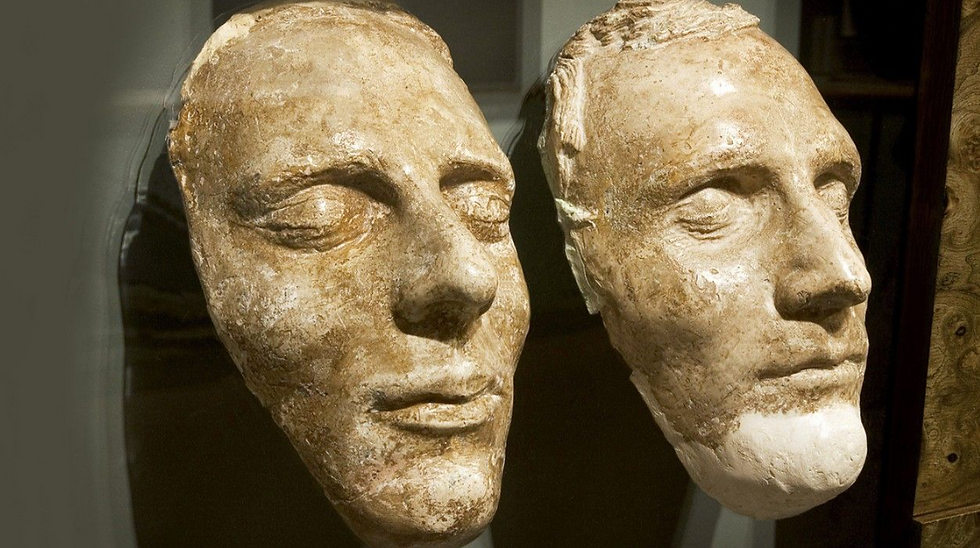
My honest opinion is that I enjoyed this museum, but it needs to be taken beyond face value and with a skeptical eye. It is not disingenuous or offensive to say that MUCH of Mormon history is left out to provide a squeaky clean image of the church (even Rough Stone Rolling, a church-sanctioned biography of Joseph Smith, covers the more scandalous and violent parts of his life, which the museum conveniently forgot to include). Docents are a little bolder here, but still extremely kind and fun to talk to.
Temple Square
Perhaps the most famously Mormon part of Salt Lake City is Temple Square. I am very happy I got to see the Salt Lake City Temple, but the majority of the Square is under construction right now. Of course, you can only see the Temple from the outside - even practicing Mormons must pass an interview with their bishop to get permission to go inside the Temple.

Driving to Temple Square from the Daughters of Utah Museum, you'll pass under the eagle gate that used to lead to Brigham Young's house. The original eagle was at the museum, and the current one was installed in the 1960s. The Temple itself was built from 1853 to 1893, which explains why it isn't as grandiose as some of the modern temples (like the one in Tualatin, Oregon visible off Highway 217). The Temple is currently undergoing a major seismic renovation, so there are construction blockades everywhere.
Brigham Young's historic "beehive house" is also in Temple Square, but sadly it is also under construction. Interestingly, the Lion House (with it's 26 bedrooms) is right next to the Beehive House, and held Brigham's 56 wives and 57 children. Both were covered in tarps, so I didn't get a chance to see either one unfortunately.
Next to the Temple is the Church Office. It is a massive skyscraper and kind of intimidating. I didn't dare go inside, as it had an air of secrecy and formality. People in suits were walking around looking businesslike and official, but very friendly.

Other buildings in Temple Square include:
The Tabernacle - where the famous choir performs
Visitors' Center (I am so bummed we didn't know about this one and totally missed it due to fear of wandering somewhere we weren't allowed)
FamilySearch Library - remember how I said Mormons were incredible archivists?
As we wandered Temple Square, several pairs of young female missionaries walked around smiling and chatting with tourists. We didn't speak to them, but appreciated their politeness. Something that struck me about SLC is how NOT pushy all the missionaries and volunteers were. Mormons have their reputation of "do you have a moment to talk about our Lord and Savior Jesus Christ?" but we honestly did not encounter that at all during our visit.
Other Fun Mormon-Coded Stuff to Do
Surprisingly, the city of Salt Lake City was not as blatantly Mormon as I expected it to be. There are subtle references everywhere, but for the most part, it felt like a normal city. I did my research beforehand and dug up a few other Mormon experiences that most tourists wouldn't notice:

Cedar Creek Center: What looks like a luxury mall is actually at the center of an LDS Church scandal (again, presented without judgement). The mall cost almost $2 billion and was developed and is now owned by the LDS Church - as a visitor to the mall, you would never know this unless you did your research. The largest drama surrounding the mall is over the source of church funds used to build it (the church promises that member's tithing was not used, but people are skeptical).

Swig Soda: Most people know that drinking alcohol is not allowed in the LDS Church. So what is a young Mormon adult supposed to do for girls' night, or a first date? Enter the ... dirty soda. This is essentially an Italian soda (seltzer, cream, and flavored syrup) with a fun name so that the Mormons can feel just a little naughty. I was disappointed in the environment of the Swig location I visited. I expected it to have a brew pub or bar atmosphere, but it was literally a few tables and chairs in a big, white box. I ordered my soda to-go and it was actually delicious and reasonably priced. I'd definitely get a to-go order again!
Deseret Book: Another subtle beehive reference! What looks like a Barnes and Noble copycat is actually a chain bookstore and LDS supplies distributor. I purchased a copy of Rough Stone Rolling here. I definitely didn't expect Deseret Book to be the distribution center for the famous "garments" worn by the LDS members, so I was very surprised to see a separate room full of white clothing. I want to be respectful of church privacy here, as they hold the garments very sacred, so I'll let you research this more if it interests you.
(You may recognize the term "deseret" from the thrift store chain "Deseret Industries" - yup, also owned by the LDS Church!)
A diagram of the LDS beliefs on Heaven They really love ranch dressing The Mormon church leaders, and oh yeah, Jesus is there too
Gilgal Gardens: The biggest disappointment of the trip... Gilgal Gardens was inexplicably closed!! No less than 3 groups of people had gathered by the gate trying to get in, and no one knew why it was shut. I was so excited to see the massive stope sculpture of a sphinx with the head of Joseph Smith. I caught a glimpse of it from the gate, but will have to come back another time.

Salt Lake City as a Non-Mormon, wrapped
I hope I was able to convey my fascination with the LDS Church and history, while respectfully pointing out some of the quirks and characters that intrigue me so much. I left a lot of my personal opinions out, but I'd be happy to share if you have any questions. I've spent probably hundreds of hours at this point researching the LDS Church, and have a lot more to go, considering I bought both Rough Stone Rolling and No Man Knows My History (two very controversial Joseph Smith biographies) during this trip.
Salt Lake City was mostly just a normal big city in the middle of a desert. If all you want is a somewhat nice place to spend the night before you head to the National Parks, you'll be content. If you are a weirdo like me who wants to uncover the religious and historical influence under every brick in this city, I am honored to help you in your journey.
Here is my list of places to visit with links and need-to-know information only.
Daughters of Utah Pioneer Museum
open Monday - Friday, 9 am to 4 pm (closed weekends!)
FREE admission
6 floors of pioneer artifacts, took us about 2 hours
open Monday - Saturday, 10 am to 6 or 8 pm (closed Sundays!)
FREE admission
smaller but lots of exhibits to see, might take longer if docents are chatty - took us 45 minutes but we rushed
recommended visiting hours 10 am to 8 pm
majority of buildings are either closed to the public or closed for renovation, so it's really just a walk outside
took us about 30 minutes to walk around outside
open Monday - Saturday, 10 am to 8 or 9 pm (closed Sundays!)
free to enter but expensive designer clothing stores
dogs are actually explicitly allowed and welcomed here! We even saw a dog training class in the middle of the mall
we only stayed for about 15 minutes
really just a normal upscale mall that happens to be owned by a religion
there is a Deseret Book in here, so knock off two items on your list at once
hours vary by location, but like most Mormon businesses, it is closed Sunday!
About $3-$6 per person
plan on getting your order to-go, there's no ambiance or cozy vibes inside
hours vary by location, but (shocker) closed Sundays!
pop in and out in 5 minutes - enough time to get the vibe of the store and notice the more Mormon-specific influences:
supplies for missionaries
garment and temple clothing distribution (don't attempt to buy anything, they do ask for your church membership number upon purchase - no, I did not try this, Google told me)
a plethora of likely-AI-generated white skinned, blue eyed, blond haired Jesus art
an entire fridge of ranch dressing despite almost no other food sold here
open whenever they darn well feel like it (but posted hours are 9-5 daily)
very small, maybe 10 minutes to walk around
highlight is a sphinx with the head of Joseph Smith
And here are some links and resources for further reading (by sharing links here, I do not publicly agree or disagree with the content):
Last Podcast on the Left series on Mormonism (adult content)
a fantastic episode of the Mormon Stories podcast that covers some lesser known beliefs about Joseph Smith
Rough Stone Rolling, by Richard Bushman (a church-sanctioned biography of Joseph Smith that is sold by Deseret Books, yet is responsible for several people leaving the church)
No Man Knows My History, by Fawn M. Brodie (who was excommunicated in 1945 after publishing this biography of Joseph Smith)
Ken Burn's film The West (not entirely about the Mormon Trail but helpful historical context)
a cartoon explaining the Mormon creation myth (might be a little offensive, but I found several practicing Mormons online stating it is accurate)
PBS Frontline's documentary series The Mormons (unbiased and fact based)
the vast majority of these links are heavily biased against the LDS church, so in the interest of fairness, here is the link to the church website
As always, thank you for reading and please let me know what you think! This is a little different than my usual content, and I'm excited to show a different side of myself to my internet friends.
If this bored you at all, be glad you aren't my husband! He wanted me to point out that I talked about Mormonism across three different states - from Hood River, Oregon, to Salt Lake City Utah - about 10 hours straight!


Comments